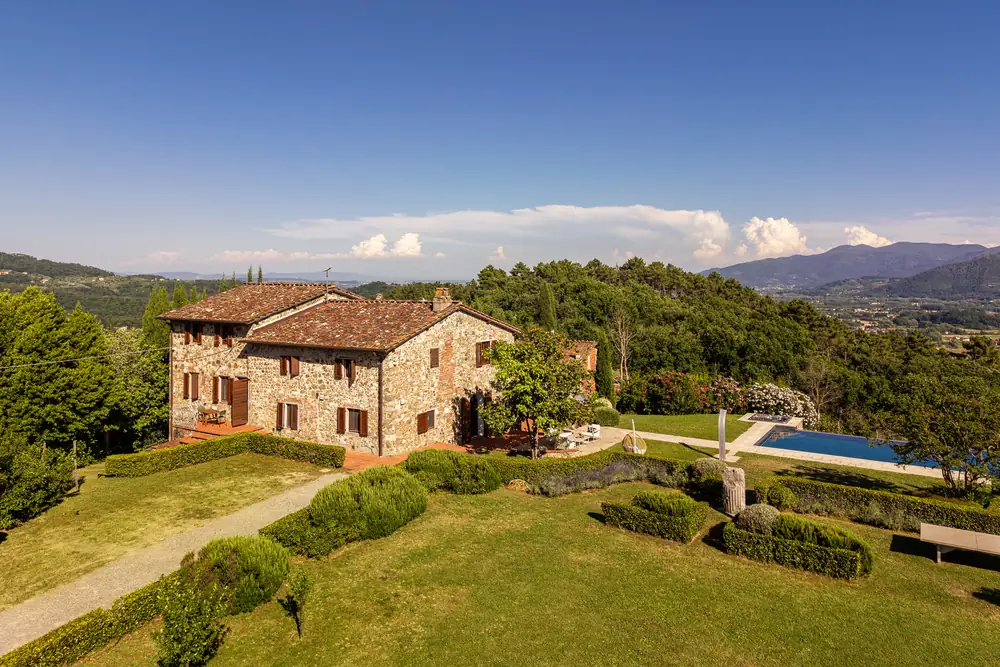
Stone and terracotta, wine and wellness — a historic hilltop Casale between Lucca and the coast.
Swim in the infinity pool, stretch in the gym, yoga in the orchard, hike and ride right out of the gate, and enjoy artisanal wine from Triano's own hillside vineyards.
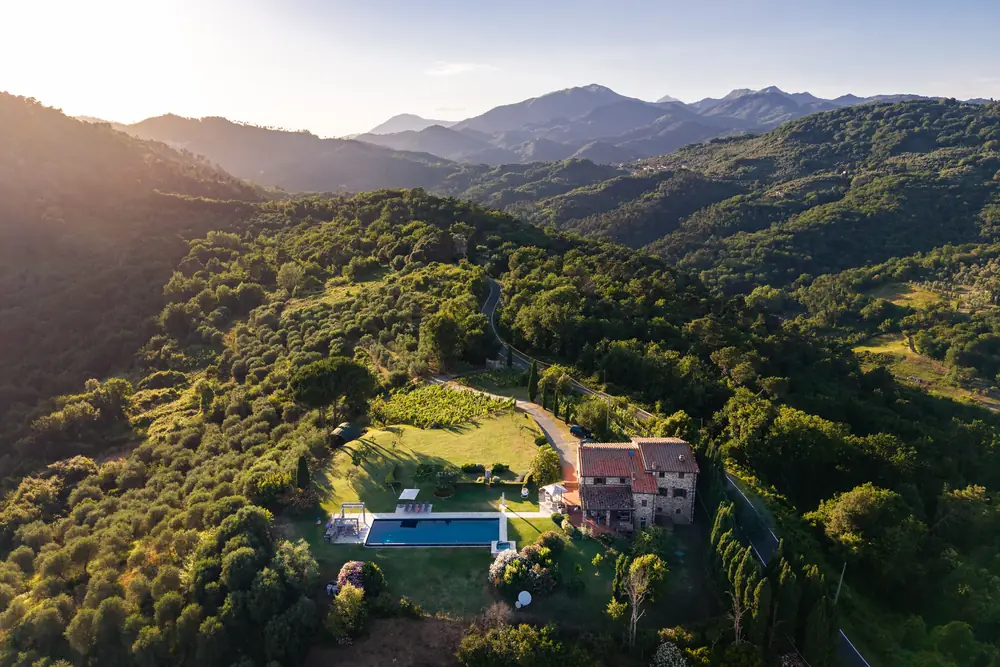
Triano rising above the surrounding forest and vineyard.
Triano sits high in the Lucchese hills, rising above the plains of Lucca, Pisa and beyond towards Monte Pisano. Early morning mist often shrouds the plains below, leaving just the sole umbrella pine, a few cypresses and the higher ridges rising through. Late evenings paint soft hues through the Apuan Alps as the sun drops behind the far ridge.
The Name
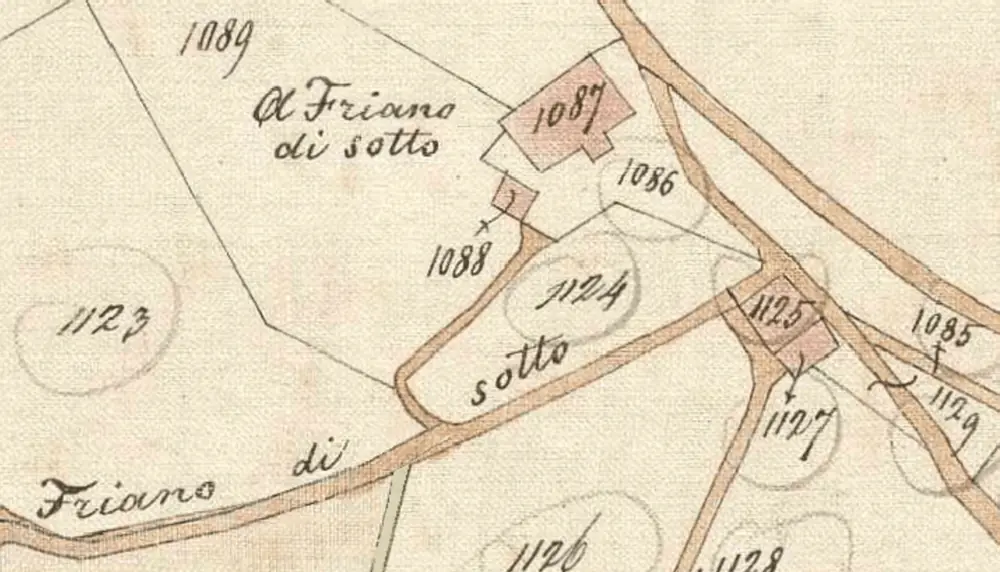
Catasto Borbonico di Lucca, 1820s.
The name Triano is deeply rooted to this hilltop land. The history can be traced back to the Catasto Borbonico, the great cadastral survey of the Duchy of Lucca made in the 1820s. The località is recorded as Triano di Sotto, the lower farmhouse of Triano. Paired with Triano di Sopra further up the same road, this hilltop has carried its name gracefully for at least two centuries on paper, and very likely far longer in memory.
The Landmarks
The road that passes below the property was once known locally as Strada della Crocetta — named for a small wayside cross that marked a junction on a Carthusian pilgrim route through these hills, leading to the imposing Certosa di Farneta, founded in 1329, which continues to anchor these hills for centuries. Chiatri, further along the same ridge, carries the memory of Giacomo Puccini. Villa Puccini was his first home purchased back in 1898. He wrote eloquently of the timeless view from these hills: "Di lassù si scorge un incanto" — from up there one glimpses an enchantment.
The hills, the paths, the stone, the road, the vines, the light — this is Triano nestled between the deeply silent contemplation of the Carthusian Charterhouse and the passionately theatrical operas of Puccini.
Stay
A peaceful sanctuary minutes from Lucca
Triano is arranged around the simple pleasures of being with nature as it has been for centuries. The casale makes moving between inside and outside spaces seamless — between the double height living spaces and the mezzanine upstairs, between the infinity pool and the portico, between activity and rest. Some days are active; others are relaxed. The casale leaves room for both.
Sleeping
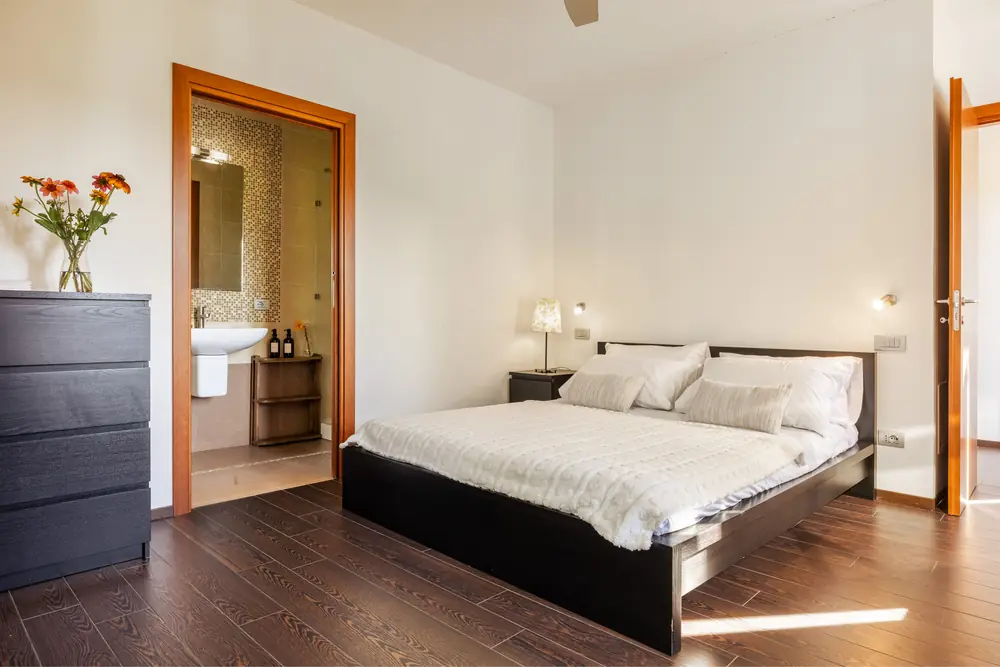
One of five bedrooms at Triano, en-suite downstairs.
The casale sleeps ten across five bedrooms. Three bedrooms have double beds. One bedroom is configured with two large singles, ideal for friends or older children. The fifth bedroom has a bunk bed — the lower berth a large single, the upper a regular single. Child cots and a baby chair are available on request. All bedrooms have shutters, ceiling fans and are naturally and sustainably cooled by the thick stone walls.
Eating
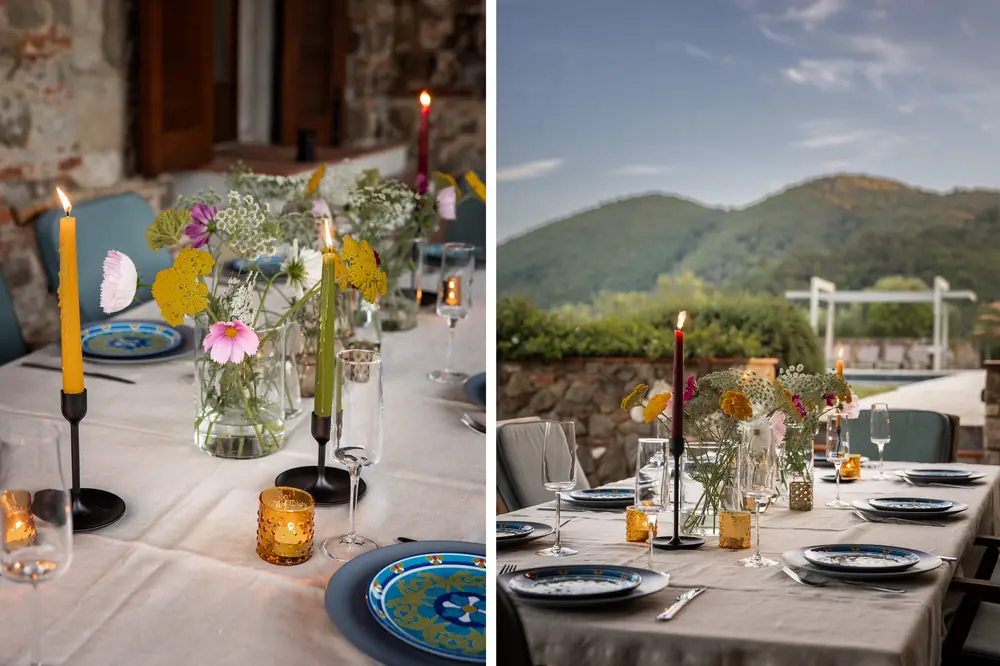
The portico table set for dinner under the Tuscan sky.
The portico, warmed by the morning sun, is adorned with an outdoor wooden dining table flanked by a wood-fired pizza oven and a barbecue. The double height dining room is the focal space inside. The kitchen is fully equipped for serious use: large double door refrigerator, two ovens, gas hobs, coffee machine, kettle, air fryer, rice cooker, blender and plate warmer. Everything needed for a family stay, a dinner party, or a quiet breakfast for the family.
Gathering
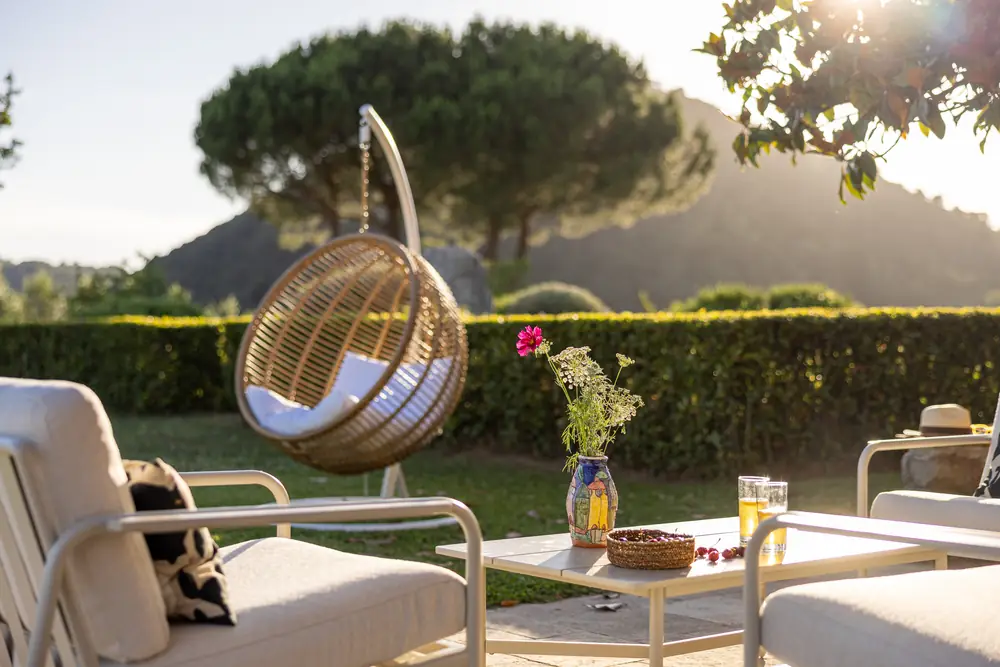
The main patio at golden hour.
Outdoor sofas and a hanging chair invite you to linger and relax. The poolside loungers and ping pong table offer endless afternoon fun. The side patio is perfect for a sundowner for two. The double-height living room with its tall conical fireplace gives the casale a unique character. The mezzanine games area is stocked for family time — board games suited to every age and mood.
Surrounded by vineyards, olive groves, fruit trees and cypresses, this hilltop casale is truly a tranquil oasis perfectly suited for families and groups of friends who want a private base to explore this part of Tuscany.
Relax
Refresh, Recharge and Restore
The Pool and the Hot Tub
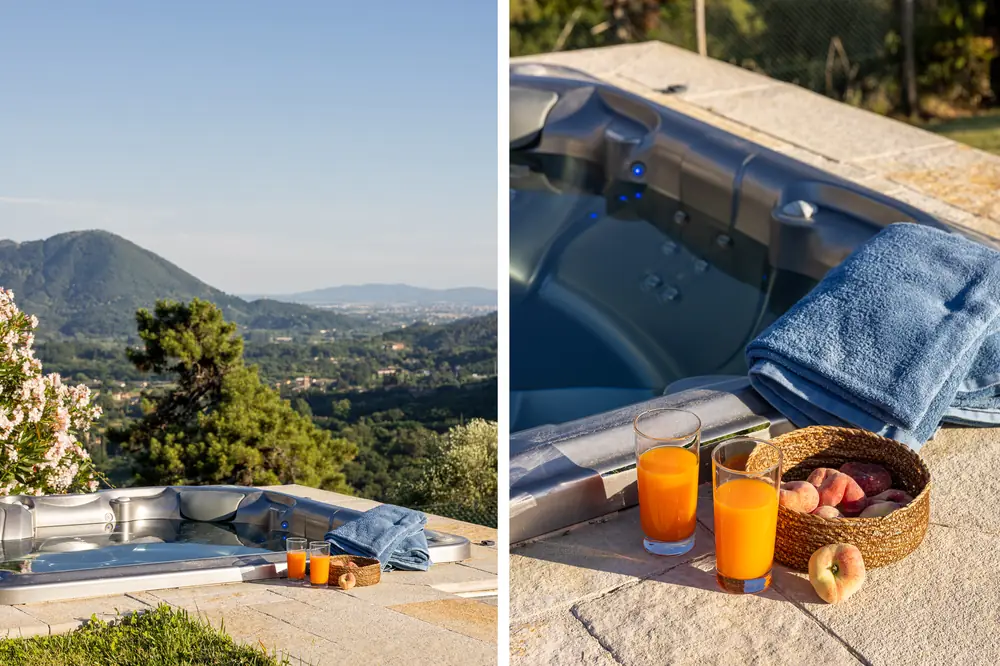
The hot tub at the hilltop edge, above the valley.
The 18 × 6m swimmer's infinity pool sits on the hilltop with expansive views over the valleys of Lucca and Pisa in the distance. The water is treated gently with salt and ozone — clean and soft without the heavy scent of chlorine. Sun loungers, a poolside pergola and relaxed outdoor seating under parasols complete the setting. Beside the pool, the hot tub is perched at the hilltop edge with exceptional views over the valley below and the peaks of the Apuan Alps above — equally well suited to the cool of the morning or the quiet after dusk.
Gym, Yoga and Fitness
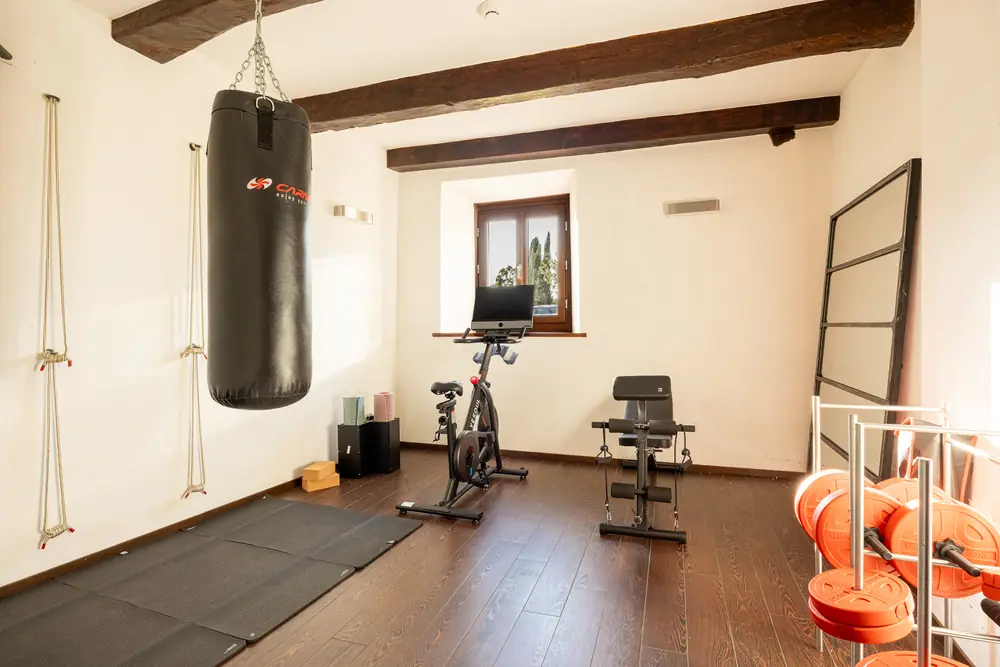
The private gym with boxing bag, spin bike and weights.
The private gym and movement space caters to most fitness routines away from home: a selection of weights, exercise bike, bench with leg curls, stretching station, pull up bar and boxing bag. Outside, the casale offers a more contemplative kind of movement — yoga under the fruit trees in the orchard, or on the freshly cut grass with the hillside vineyards falling away below. Few settings make the effort feel more effortless.
Run, Ride and Hike
The road winding through the hills below Triano.
The hilly trails around the casale are loved by cyclists and runners alike. Routes rise and fall through forest, olive groves and historic hamlets — varied enough for a long training ride or a quiet morning run. Closer to Lucca, the traffic-free riverside paths along the Serchio and the famous circuit atop the city walls offer a unique and beautiful setting for cycling and walking. The wetlands of Lake Massaciuccoli are exceptional for birdwatching and gentle waterside walks. For those drawn to more dramatic terrain, the Apuan Alps offer hiking routes with sweeping views over the Tyrrhenian Sea and the Tuscan plains.
Swim in the 18 × 6m infinity pool, stretch in the private indoor gym, yoga in the orchard, hike and bike right out of the gate, soak in the hot tub with stunning valley views and enjoy artisanal wine from Triano's own hillside vineyards.
Cultivate
Grow, Thrive and Sustain
Triano is surrounded by land that is alive and has been for centuries. The cypress-lined drive beyond the gates rises through vines and fruit orchards as the casale comes into view over the horizon, towering over the olive groves on the hillside slopes below. The hills here are dense and pristine — serene views, clean air and the quiet of a landscape undisturbed by man.
Wine
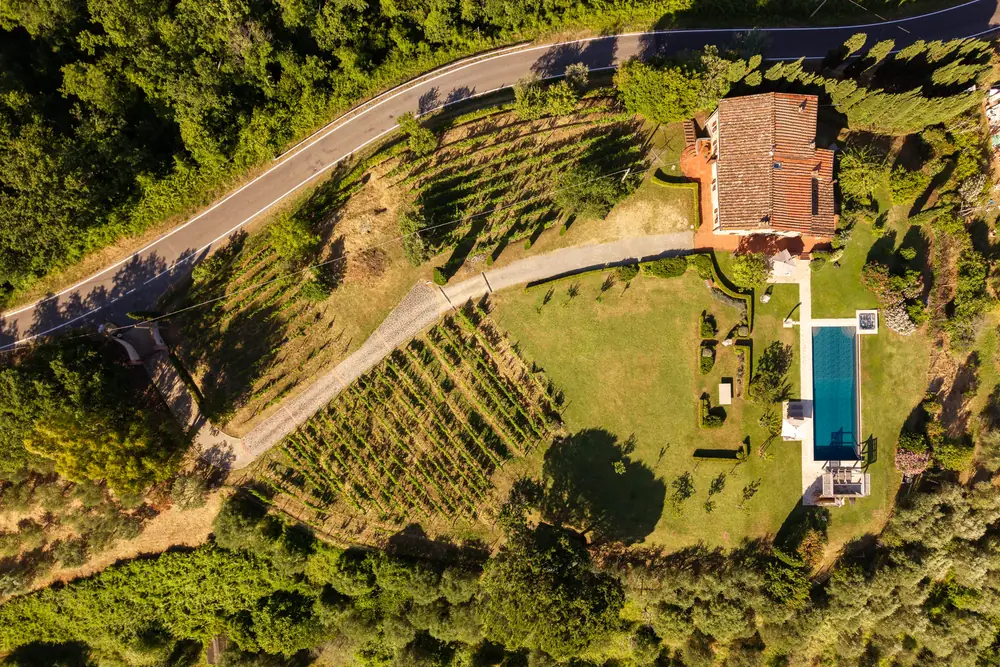
The Triano vineyards seen from above — the vines that produce Vesperino.
Vesperino is Triano's natural red wine: an artisanal expression of the vines grown on the slopes around the casale. A traditional Lucchese blend dominated by Sangiovese, the wine is fermented spontaneously, macerated on the skins and entirely natural with no filtration or clarification. Recent vintages are aged in oak tonneau, bringing a warmer and more rounded expression of the hill and forests. Historically made in the basement of the casale, today the wine is produced at small scale by local hands driving social inclusion and dignified work. The name Vesperino comes from vespers — the evening hour when heat leaves the stone, shadows lengthen across the vines, the hills fall quiet and the valley turns into contemplation.
Olives and Fruits
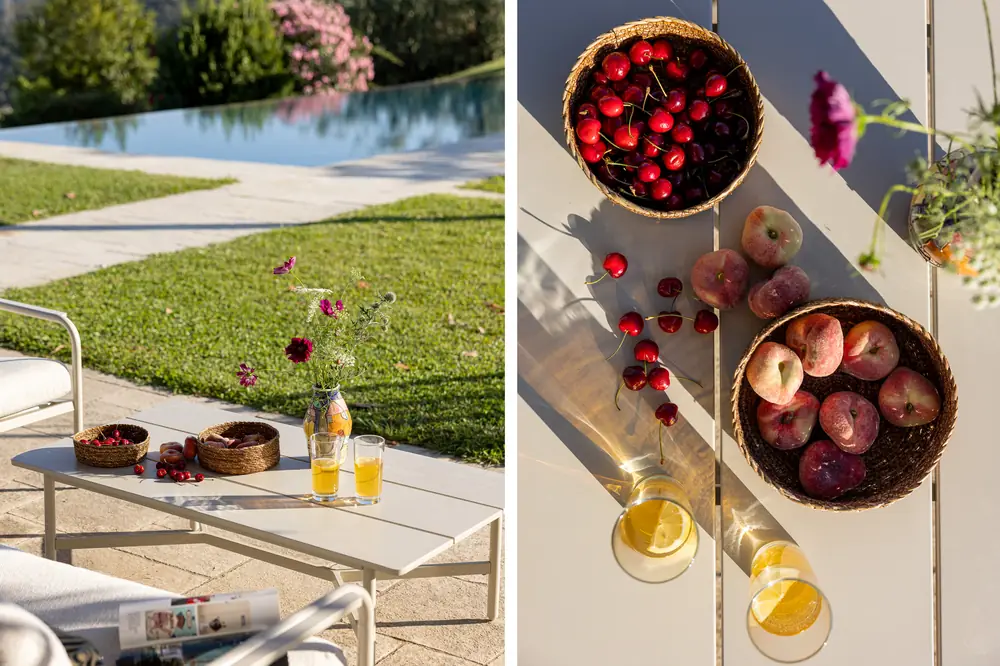
Cherries and peaches, fresh from Triano's own orchards.
Merrigino, Triano's olive oil is harvested from the olive groves on the lower slopes of the casale with a clarity that reflects the air and a flavour that reflects the quiet midday sun. The gardens are dotted with lemon, orange, cherry, apricot, pear, plum, pomegranate and persimmon trees. At Triano, wine, oil and fruits have long been part of the table and the land.
Nature and Sustainability
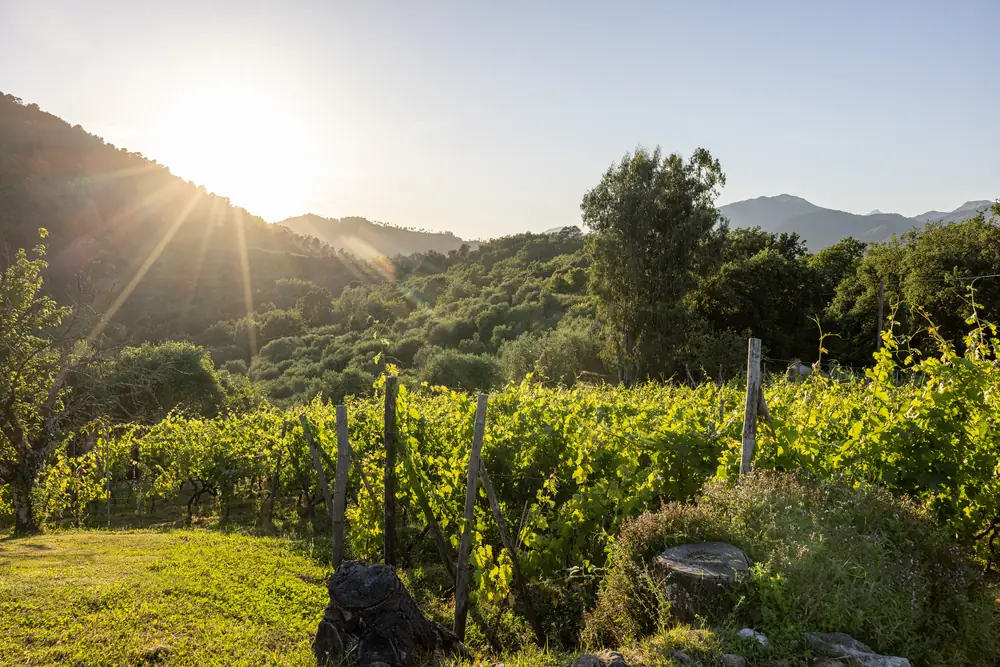
Golden hour over the vineyard and surrounding woodland.
Preserving and sustaining nature is paramount at Triano. Rainwater is used for irrigation. Waste water is recycled through septic tanks. The casale is naturally cooled with cross ventilation and thick stone walls without artificial air conditioning. Bees, birds, wildflowers and deer thrive alongside the vines and olives. When the sun goes down on clear nights, fireflies appear in the shrubs and hedges below the terrace while above, the sky fills with stars, taking turns to twinkle across the horizon.
To cultivate here is to grow, sustain and savour — conserving this hilltop just as it has been for centuries.
Experience
Carefully curated on request by your host, Maneri.
Tell us what you'd like to experience and we will arrange it, from tastings in the wine hills around Lucca to beach days on the Versilia coast and in-casale dinners prepared by a private chef.
Pre-Arrival Grocery & ExtrasStocked fridge on arrival, hand-picked local wines and pantry essentials waiting for you. Extra cleaning, laundry, and mid-stay refresh services available on request.
Private Chef in the CasaleA multi-course Tuscan dinner prepared and served at Triano by a private chef, or a hands-on cooking class for the group. Fresh pasta, regional specialities, local olive oil from hills like your own.
Day Trips & Guided ToursPisa, Florence, the Cinque Terre, the marble quarries of Carrara: all within easy reach. We design the route, the timing, and arrange a private driver where useful.
Cycling from the CasaleRide the famous Renaissance walls of Lucca, roll through the surrounding hills, or take the flat route all the way to the coast. We arrange quality bike rental and route suggestions for every level.
Beach Days on the Versilia CoastViareggio is 25 minutes away and the beach clubs of Forte dei Marmi 35. We reserve loungers and umbrellas at the right stabilimento, so your sea day is as effortless as your pool day.
Wine Tastings in the Lucca HillsPrivate visits to the family-run wineries of the Colline Lucchesi and Montecarlo, small producers where the tasting happens with the winemaker and the crowds stay away.
Yoga & Wellness RetreatsMorning yoga on the terrace above the vineyards, or a full afternoon of massage and treatments in the garden. We bring an instructor or therapist to Triano and build the retreat around your group's pace.
Hiking & WalkingTrails lead straight from the gate into the Lucchese hills, with the Apuan Alps and Garfagnana valley offering a fuller day's walk for the more adventurous. We suggest routes for every level and can arrange a local guide.
Family OccasionsMilestone birthdays, anniversaries, intimate weddings and reunions gathered under one roof, from a celebration dinner to entertainment for the youngest guests. We handle the details so the family can simply enjoy the day.
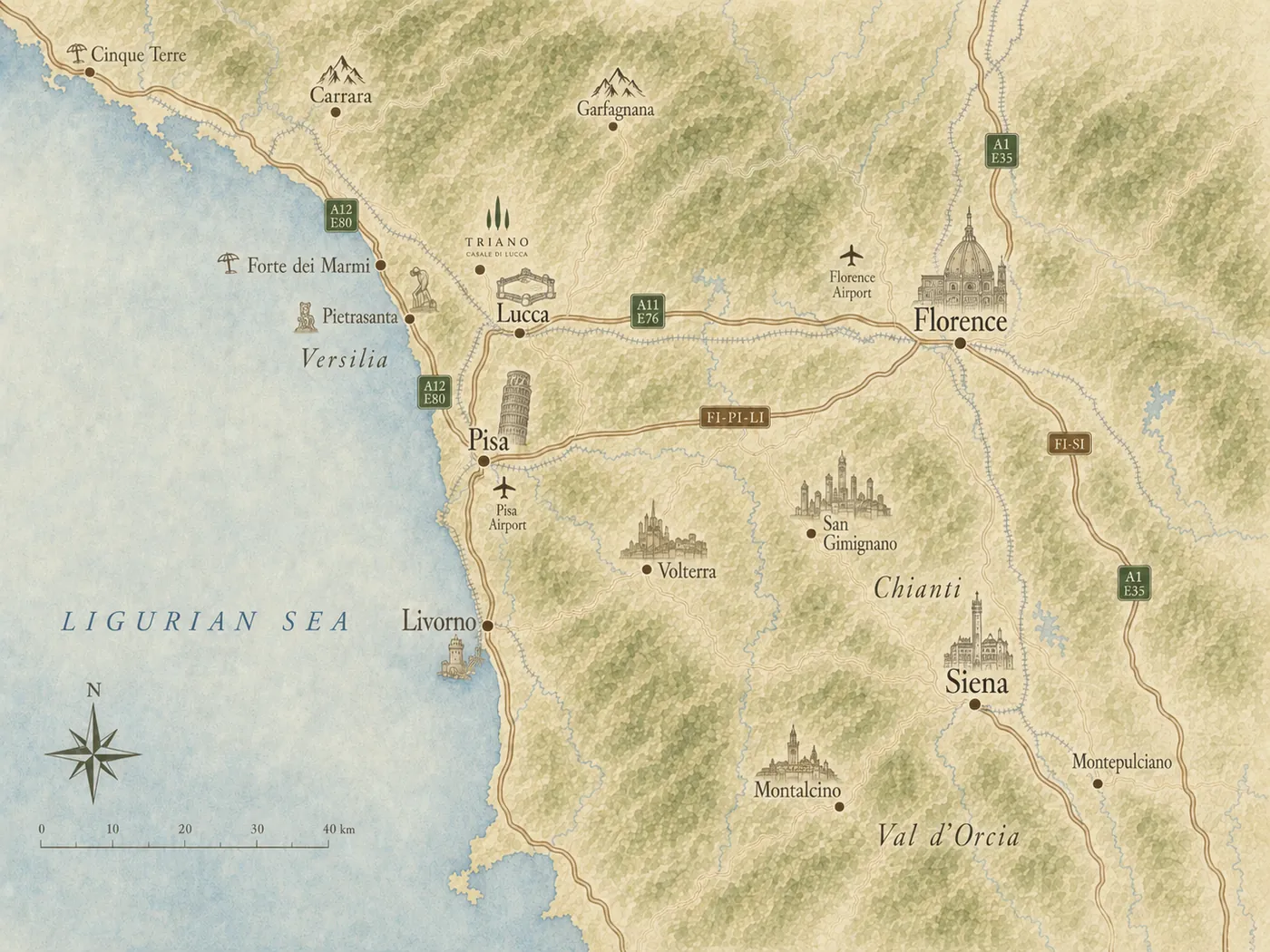
Triano sits at the heart of one of the richest concentrations of art, culture, nature, cuisine, wine, landscape and history in Italy. From the hilltop, almost everything within a two-hour drive is worth the journey.
‹
Lucca15 min
Pisa30 min
Pietrasanta30 min
Lake Massaciuccoli25 min
Forte dei Marmi40 min
Florence1 hr
Carrara1 hr
Apuan Alps30 min
Volterra1 hr 30
San Gimignano1 hr 30
Chianti1 hr 30
Cinque Terre1 hr 30
Siena2 hrs
Val d'Orcia2 hrs
›
Lucca15 minutes
The natural centre of gravity for a stay at Triano. Medieval walls, a Roman amphitheatre, weekly markets, excellent restaurants and a city that still feels genuinely lived in. Easy for an evening as well as a full day.
Pisa30 minutes
Beyond the Leaning Tower — which remains extraordinary — Pisa has a university quarter, riverside cafés and a pace quite different from its tourist surface. Worth an afternoon.
Pietrasanta30 minutes
Known as Little Athens, Pietrasanta has drawn international sculptors since Michelangelo first came here for marble in 1516. The medieval centre is an open-air museum: over 60 monumental works by Botero, Mitoraj and others populate its streets and squares. Marble workshops and bronze foundries still operate alongside galleries, and the Museo dei Bozzetti holds over 700 sculpture models by more than 350 artists from around the world.
Lake Massaciuccoli25 minutes
Tuscany's most important wetland, within the Migliarino San Rossore Regional Park. The eastern shore is crossed by wooden boardwalks skimming above the reed beds, with observation hides for birdwatching across over 260 recorded species. On the western shore, Torre del Lago Puccini — where the composer wrote most of his operas — hosts the famous open-air Puccini Festival each summer. Spring and autumn are the finest seasons to visit.
Forte dei Marmi and the Versilia Coast40 minutes
The most refined stretch of the Tuscan coast: wide sandy beaches, excellent seafood and the quiet elegance of Forte dei Marmi itself. Pietrasanta, just inland, is a town of sculptors and galleries. Viareggio offers a livelier, more traditional seaside.
Florence1 hour
The Uffizi, the Accademia, the Duomo, Santa Croce — the Florentine galleries and churches need no introduction. Allow a full day, ideally two. Arrive early; the light in the morning on the Arno is worth the early start.
Carrara1 hour
The marble quarries above Carrara are one of the great industrial landscapes of the world — white stone mountains rising into the Apuan Alps that supplied sculptors from Michelangelo to the present day. The peaks are visible from Triano on a clear day.
Apuan Alpsfrom 30 minutes
The white peaks visible from Triano on clear days are closer than they appear. The Garfagnana valley and its medieval hilltop towns — Barga, Castelnuovo, Coreglia — offer hiking, mountain biking and via ferrata routes through dramatic terrain. Bagni di Lucca, once favoured by Byron and Shelley for its thermal springs, is today a base for canyoning and white-water adventures in gorges ranked among Italy's most beautiful. The Grotta del Vento cave system near Fornovolasco is open year-round.
Volterra1 hour 30 minutes
An Etruscan hilltop town of considerable depth: alabaster workshops, a Roman theatre, medieval towers and views across open country that feel far removed from the tourist circuit. Often quieter than San Gimignano and, many feel, more rewarding.
San Gimignano1 hour 30 minutes
The medieval towers of San Gimignano are among the most recognisable silhouettes in Tuscany. Best visited early in the morning before the coaches arrive. The surrounding Val d'Elsa countryside is lovely in its own right.
Chianti1 hour 30 minutes
The Chiantigiana road south from Florence winds through vineyards, olive groves and hill towns — Greve, Panzano, Radda, Castellina — in a landscape that defines the Tuscan hills at their most classic. A full day's drive with stops, or a single long lunch at one of the estate restaurants.
Cinque Terre1 hour 30 minutes
The five villages of the Ligurian coast are reachable as a long day trip — best approached by train from La Spezia to avoid the parking difficulties. The walking path between the villages and the view from the water are the reasons to go.
Siena2 hours
The Campo, the Duomo, the Palio tradition and the best preserved medieval city centre in Italy. Allow a full day. The drive south through the Sienese countryside is part of the pleasure.
Val d'Orcia2 hours
The Val d'Orcia — a UNESCO World Heritage landscape of rolling hills, cypress avenues and Renaissance hill towns — is home to two of Italy's greatest wine appellations. Montalcino produces Brunello, one of the world's most celebrated reds; Montepulciano its neighbour in Vino Nobile. Between them, the road winds through some of the most photographed countryside in Italy. Allow a full day and plan around a long lunch at one of the estate cantinas.
The fuller local guide — places to eat, swim, ride, shop and wander in the immediate hills — is shared privately with guests.
View
Gallery: Triano in pictures
Everything Triano has to offer — in pictures. The casale inside and out, the pool, the grounds and the views beyond.
Contact
Connect with Triano
Tell us your dates, the size of your group and anything useful about your stay. We will reply with availability and all the details you need.
Your email draft is ready. Please remember to hit send in your email app to make sure we receive your request.
No data is stored through this website — this form only opens a pre-filled email draft in your own mail app. The information you choose to send will be received by your host and used solely in the context of your booking.